
Fence Company in Sweet Home, Oregon
Privacy fences, cedar, chain link, gates and repairs — built to your property line by a licensed Oregon contractor who answers his own phone. Free estimates.
- CCB #257281Oregon licensed & insured
- Locally ownedBased in Albany, working the valley
- You talk to the builderNot an out-of-state call centre
- Free estimatesWe follow up to learn the project
Get your Sweet Home fence quoted
Tell us what you want built, repaired or replaced. Free estimate, straight answers, and a real licence number you can look up.
Thanks — that's with us.
We'll call you back to set up a time to come out and measure. If it's urgent, call (458) 278-2166 and you'll get a person.
What we build in Sweet Home
Fencing is the core of the business — not a sideline bolted onto a general remodelling company.
Privacy fences
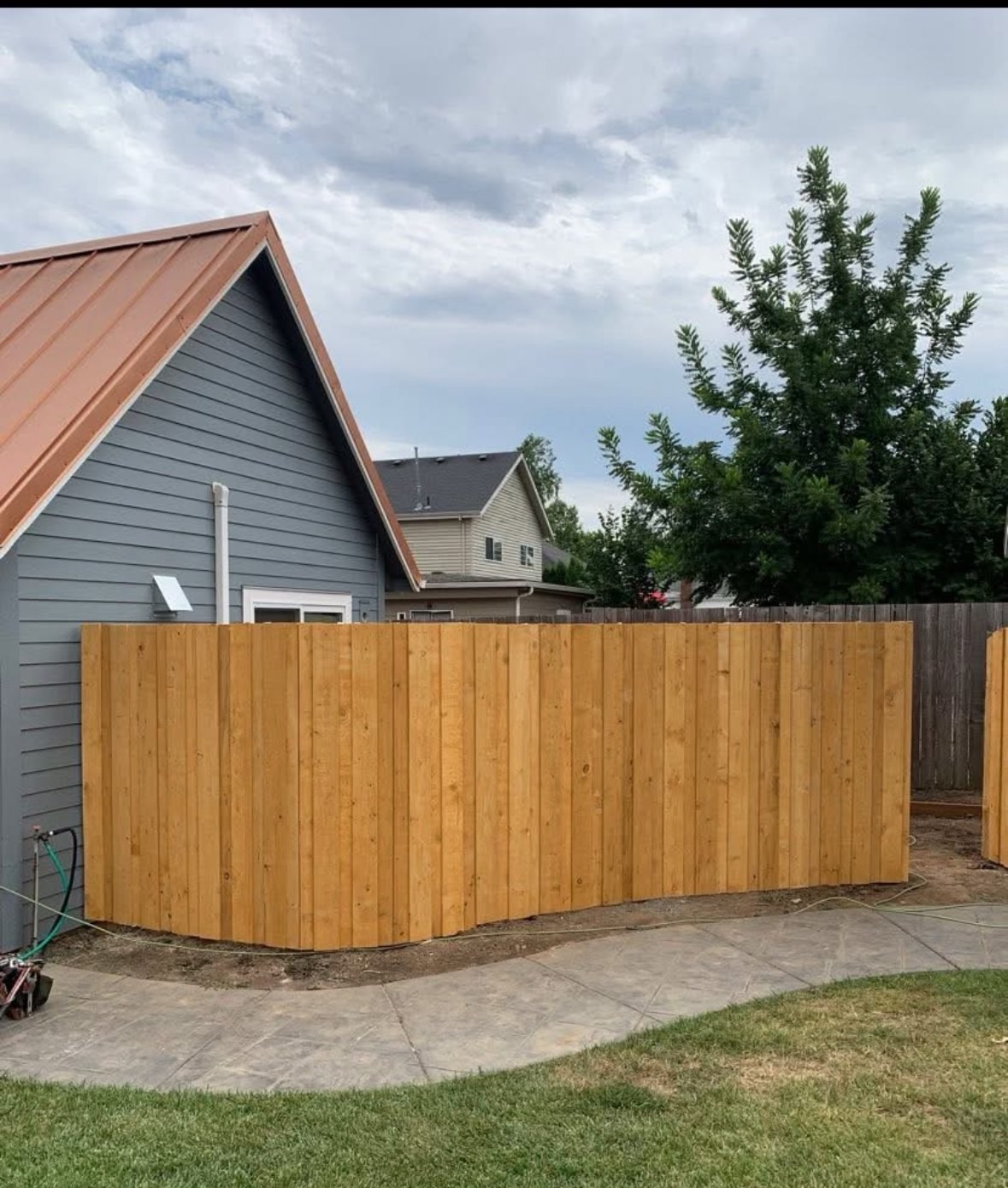
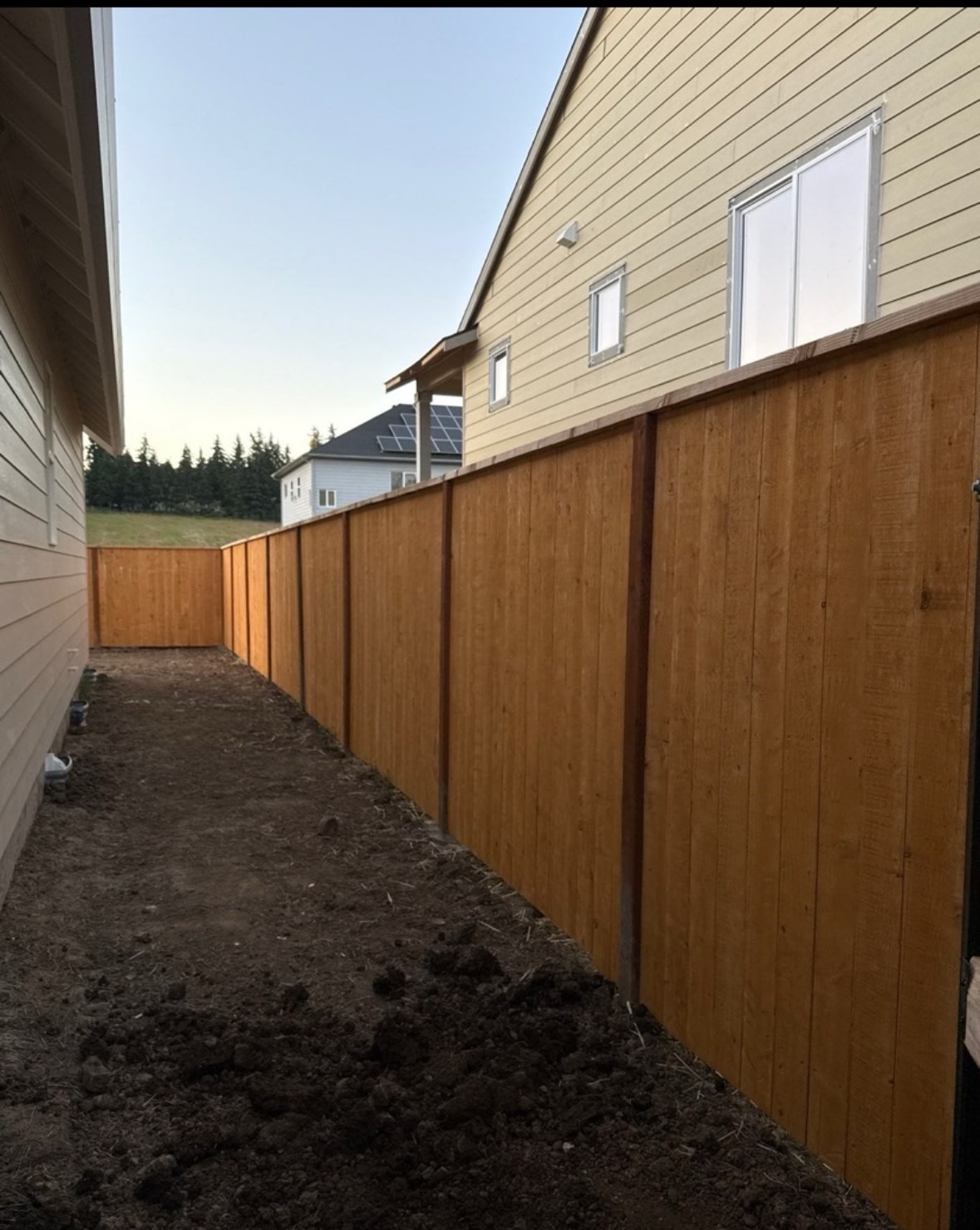
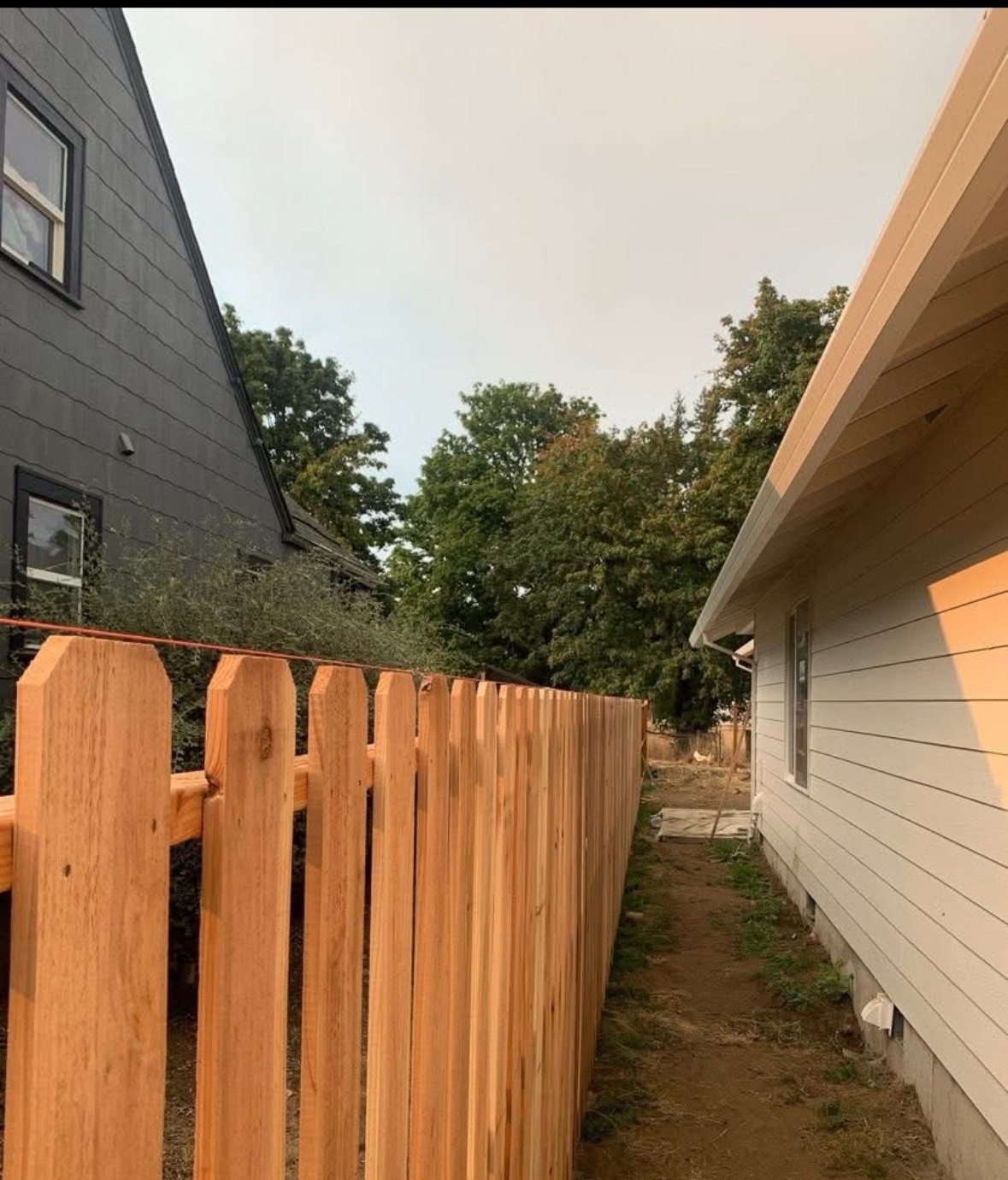
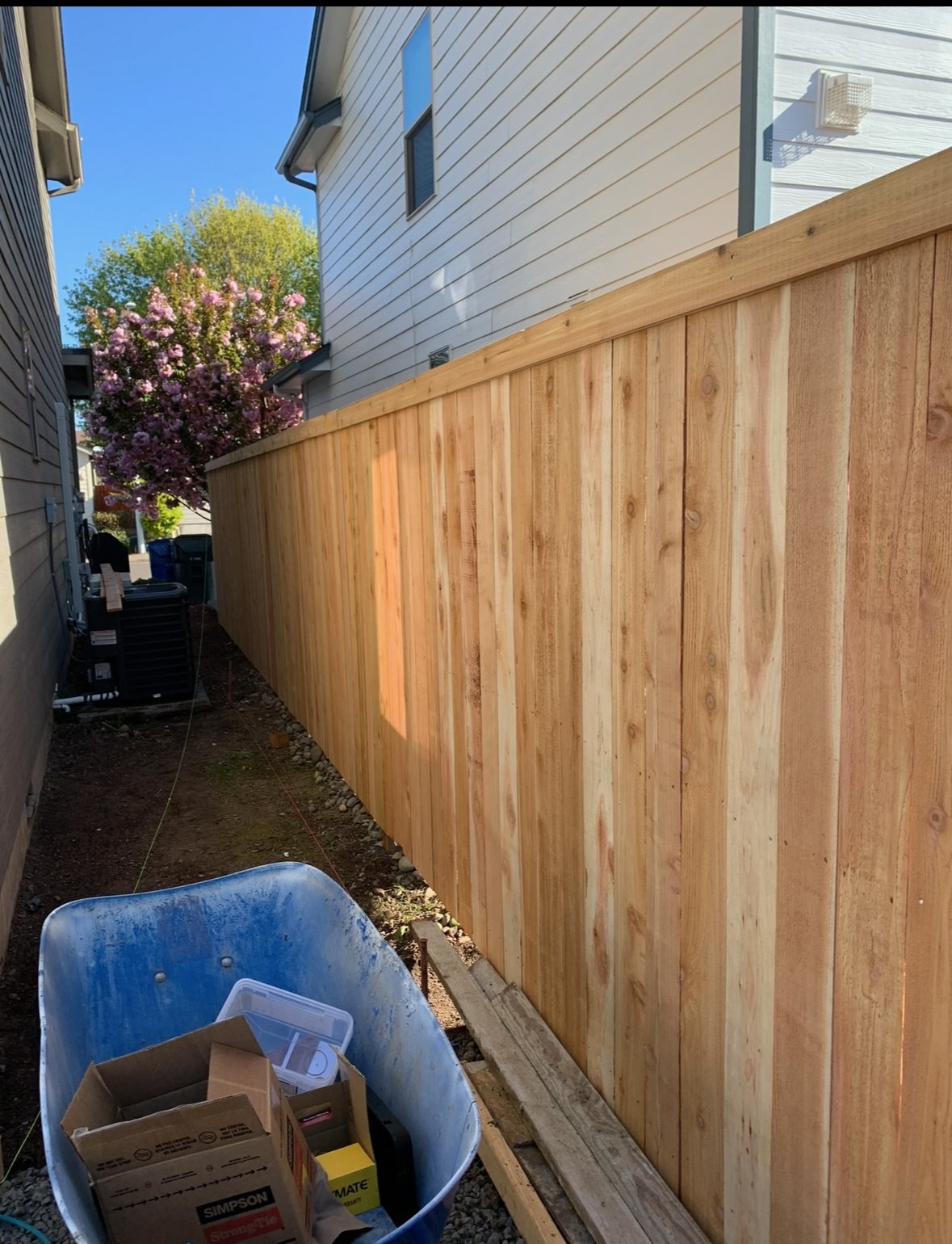
Cedar dog-ear, board-on-board and shadow box, built to sit level along an uneven line.
Cedar & wood
Decorative tops, cap and trim, and horizontal styles when the look matters as much as the screening.
Chain link
Straightforward, durable containment for pets, yards and side runs.
Gates
Walk gates and double drive gates hung so they still swing true in a year.
Fence repair
Storm damage, leaning posts, rotted boards and sagging gates — repaired rather than replaced where that is the honest answer.
Decks & siding
The same crew handles decking and siding when the exterior needs more than a fence.
Sweet Home's fence rules, in plain English
Two things catch people out in Sweet Home. You need a permit for every fence, no matter how short. And on a standard lot the limit across a front yard is three and a half feet — not six. Here's what the Development Code actually says, before you set a post. The figures below come from the Sweet Home Municipal Code and apply inside the city limits; neighboring cities like Lebanon set their own rules, and unincorporated spots like Foster and Holley fall under Linn County.
| Where the fence runs | Max height | Catch |
|---|---|---|
| Interior side and rear lines that don't abut a street | 7 ft | The tallest a residential fence goes under SHMC 17.52.040.A.3 — there's no 8 ft option here. |
| Side or rear yard abutting a street, more than 3 ft back from the street property line | 7 ft | Pull the fence back off the street line by more than three feet and 17.52.040.A.2.b gives you the full seven. |
| Side or rear yard abutting a street, less than 3 ft from the street property line | 3 ft 6 in solid, 4 ft open | That's the code's own wording in 17.52.040.A.2.a — "less than three feet" — so a fence set at exactly three feet isn't squarely addressed either way. Set it back past three feet, or ask Planning. Solid caps at three and a half; chain link or another open material gets four. |
| Anywhere in a front yard abutting a street (R-1, R-2, R-3, MU) | 3 ft 6 in solid, 4 ft open | Front yard here means the whole yard, not a strip by the sidewalk — 17.52.010 runs it from the front lot line back to your actual front building line, or your zone's front setback, whichever is less. On a standard lot a 6 ft privacy panel out front doesn't comply. Flag lots are the exception — next row. |
| Front yard of a flag lot, where that front yard abuts interior side or rear yards on all sides | 7 ft | SHMC 17.52.040.A.5 expressly allows seven feet out front on a qualifying flag lot. The pole — the narrow strip running out to the street — still gets 3 ft 6 in solid or 4 ft open. |
| Along a pathway or walkway, on new residential construction | 5 ft see-through, 4 ft solid | Metal, rock or vinyl, on treated wood posts set in concrete footings. SHMC 17.52.070 is trying to avoid a tunneling effect along narrow paths, so see-through gets the extra foot. |
| Around a swimming pool | 6 ft minimum | This one's a floor, not a ceiling — 17.52.100 wants a locking fence at least six feet tall, and an existing structure can be built into the fence design. Watch the collision: a pool in a front yard runs that six-foot floor straight into the 3 ft 6 in front-yard cap in 17.52.040.A.1, and the code doesn't say which one wins. Call Planning before you build that one. |
The front yard rule is stricter than it looks — and it has two exceptions. Sweet Home doesn't measure the front yard as a shallow band near the sidewalk. Under SHMC 17.52.010 it runs from the front lot line all the way back to your actual front building line — or to the front setback your zone requires, whichever is shorter. Inside all of that, solid fence caps at three and a half feet and open fence at four. Two exceptions matter. On a flag lot, SHMC 17.52.040.A.5 allows seven feet in the front yard provided that front yard abuts interior side or rear yards on all sides. And on a through lot — a street at the front and another at the back — SHMC 17.52.040.A.4 sends you somewhere else entirely: fences follow the front setbacks required by your underlying zone on both streets, not the three-foot street-line test in the rows above. Pull your zone's setbacks before you measure.
A permit for every fence, even a 3-footer. SHMC 17.52.020.A reads that no person shall construct or reconstruct any fence or wall without first obtaining a permit. No height threshold, no small-fence exemption — and because it says "reconstruct," tearing out an old fence and standing a new one in its place is covered too. It's a planning permit through the City's Community & Economic Development Department at 3225 Main Street, and the City's fee page lists a fence permit at $25. Call the Planning Division at (541) 367-8113 to confirm what the application asks for. Ask at the same time whether your lot sits in a cottage cluster development or a manufactured dwelling park — SHMC 17.62.030 and 17.64.010 add fence rules stricter than Chapter 17.52.
Corners and driveways cap you at 36 inches. SHMC 17.56.060 requires a clear vision area wherever streets meet other streets, driveways, alleys or access easements. No fence, wall or hedge inside it may exceed 36 inches, measured from the top of the curb — or from established street centerline grade where there's no curb. A corner lot gets 20 ft along the right-of-way of each intersecting street; driveways, alleys and access easements get 10 ft along the access and 20 ft along the street. The section does let some things through: trees limbed clear to 8 ft above grade, telephone, power and cable television poles, and switch boxes under 10 inches at the widest dimension. It also waives clear vision entirely at intersections with traffic signals.
Barbed wire and electric are off the table on a house lot. SHMC 17.52.030.C prohibits electric wire, barbed wire, broken glass and spikes. Barbed wire is allowed only on top of a six-foot fence in non-residential zones, capped at seven feet overall, or to contain livestock where livestock are permitted — and those runs have to carry visible hazard warnings at 15-foot intervals. Electric fence is limited to pasturing or controlling livestock: four feet maximum, a pulsed charge rather than a continuous one, wires on the inside face of the posts, and "Warning, Electric Fence" signs at intervals of not less than 15 feet. One heads-up: the City's own downloadable fence handout still carries the older wording limiting barbed wire to the industrial (M) zone. Ord. 1321 changed that to non-residential zones in July 2023, and the live code is what counts.
What you build it out of is regulated too. SHMC 17.52.030.A wants materials actually manufactured for fencing — wood, wrought iron, vinyl, aluminum, or chain link with a top rail support. Corrugated cardboard, corrugated metal, plywood, wooden pallets, concrete rubble and junked material are named as prohibited. Walls have to be masonry, rock, concrete, concrete block or similar under 17.52.030.B.
Hedges, grade and gates. A hedge within five feet of a property line abutting a street is held to three and a half feet, same as a solid fence (SHMC 17.52.020.F) — and 17.04.020 defines a fence to include hedges and living bushes or shrubs, so the trimming isn't optional. Height is measured from the average grade adjacent to the fence (17.52.020.D), and if it sits on a berm you measure from the bottom of the berm. Gates may not open or swing into the public right-of-way (17.52.020.G).
Call 811 first. Contact the Oregon Utility Notification Center two business days before digging. That's every post hole.
Source: City of Sweet Home — Development Code (SHMC Title 17 — Zoning), Chapter 17.52 Fencing and Screening. Summarised here in good faith and current as of July 2026; the City is the authority, and rules can change. On anything unusual — corner lots, retaining walls, an HOA — confirm with the City before you build.
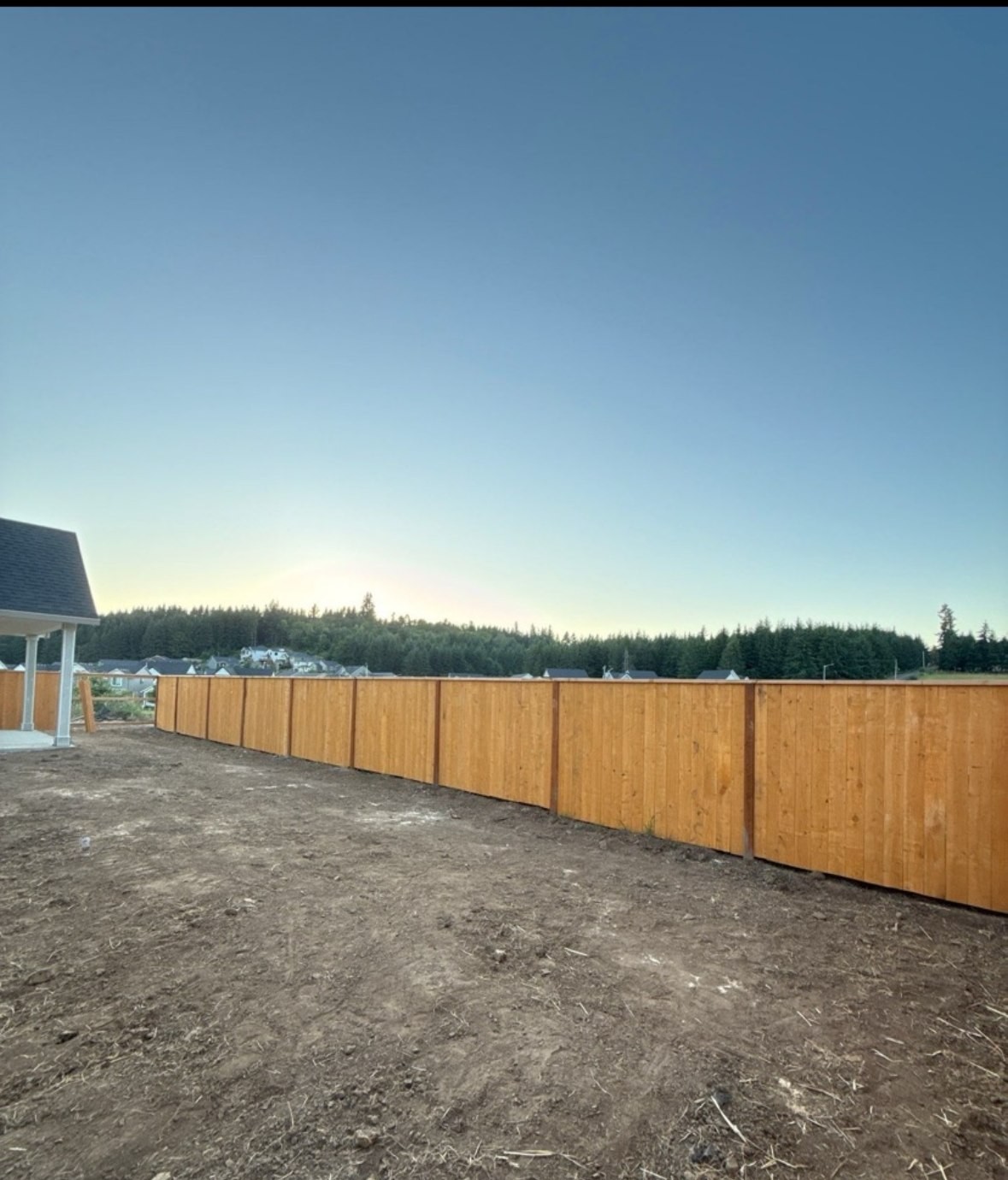
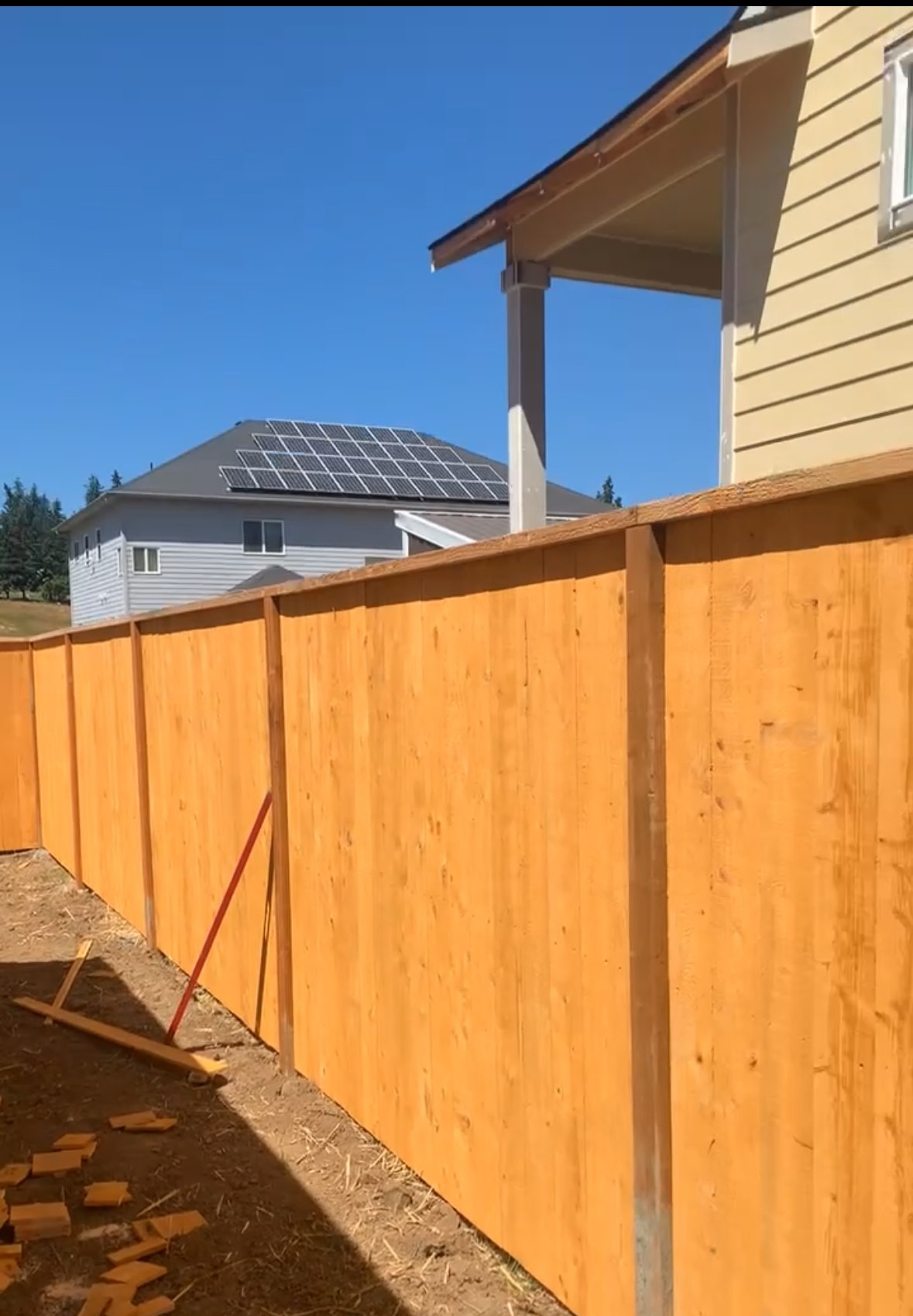
Fences we've actually built
Real jobs, photographed as they finished. No stock photography.
Questions Sweet Home homeowners ask
How tall can my back fence be in Sweet Home?
Seven feet along interior side and rear property lines that don't abut a street (SHMC 17.52.040.A.3). If that line does border a street, you can still get seven feet — as long as the fence sits more than three feet back from the street property line. The code drops you to three and a half feet solid, or four feet in an open material like chain link, for a fence located "less than three feet" from that line. A fence set at exactly three feet falls between the two subsections, so set it back past three feet or check with Planning first.
Do I need a permit to build a fence in Sweet Home?
Yes — for every fence, at every height. SHMC 17.52.020.A says no fence or wall may be constructed or reconstructed without first obtaining a permit, and there's no exemption for short fences anywhere in the chapter. Because it says "reconstruct," replacing an existing fence needs one too. It's a planning permit through the City's Community & Economic Development Department at 3225 Main Street, and the City's fee page lists it at $25. SHMC 17.90.040 treats fence permits and building permits as separate items, so call the Planning Division at (541) 367-8113 to confirm what the application asks for and whether anything else applies to what you're building.
Can I put a 6 ft privacy fence across my front yard?
Usually no — with one real exception. In the R-1, R-2, R-3 and MU zones, a fence in a front yard abutting a street caps at three and a half feet solid, or four feet in an open material like chain link (SHMC 17.52.040.A.1), and that applies across the entire front yard, which the code defines as running from the front lot line to your actual front building line or your zone's front setback, whichever is less. The exception is flag lots: SHMC 17.52.040.A.5 allows seven feet in a flag lot's front yard provided that front yard abuts interior side or rear yards on all sides — though the pole strip out to the street stays at the low limit. On a standard lot, privacy height has to start behind the front building line.
I'm on a corner lot in Sweet Home — what changes?
Two things, and there's a third if your lot is actually a through lot rather than a corner. First, clear vision: SHMC 17.56.060 gives a corner lot 20 feet along the right-of-way of each intersecting street, and no fence, wall or hedge inside that triangle may exceed 36 inches, measured from the top of the curb. Your driveway gets its own — 10 feet along the driveway, 20 feet along the street. Second, both street-facing sides count as yards abutting a street under SHMC 17.52.040, so the three-foot street-line test applies to each of them, not just the one you think of as the front. Third: if you have a street at the front and another at the back, that's a through lot, and SHMC 17.52.040.A.4 replaces the three-foot test with the front setbacks your underlying zone requires on both streets. Worth knowing which one you are before you order material.
Are you licensed and insured?
Yes — Oregon CCB #257281, and insured. You can look the licence up yourself on the Oregon Construction Contractors Board site. Oregon requires contractors to put that number on their advertising, so if you're comparing quotes and someone doesn't show theirs, that's worth asking about.
Do you charge for an estimate?
No. Request a free quote and we'll follow up to learn more about the project — what you want built, repaired or replaced, and where the line runs.
Are you actually local?
Yes. Live Your Future Construction LLC is an Oregon company based in Albany, working Sweet Home and the mid-Willamette Valley. When you call, you get the person who'll be building your fence — not a scheduler in another state.
Other areas we cover
Fence rules change at every city line. These are written up the same way, city by city.
- Fence company in Salem, Oregon
- Fence company in Albany, Oregon
- Fence company in Keizer, Oregon
- Fence company in Corvallis, Oregon
- Fence company in Lebanon, Oregon
- Fence company in Philomath, Oregon
- Fence company in Independence and Monmouth, Oregon
- Fence company in Dallas, Oregon
- Fence company in Stayton, Oregon
- Fence company in Jefferson, Oregon
- Fence company in Millersburg and Tangent, Oregon
- Fence company in Silverton, Oregon