
Fence Company in Dallas, Oregon
Privacy fences, cedar, chain link, gates and repairs — built to your property line by a licensed Oregon contractor who answers his own phone. Free estimates.
- CCB #257281Oregon licensed & insured
- Locally ownedBased in Albany, working the valley
- You talk to the builderNot an out-of-state call centre
- Free estimatesWe follow up to learn the project
Get your Dallas fence quoted
Tell us what you want built, repaired or replaced. Free estimate, straight answers, and a real licence number you can look up.
Thanks — that's with us.
We'll call you back to set up a time to come out and measure. If it's urgent, call (458) 278-2166 and you'll get a person.
What we build in Dallas
Fencing is the core of the business — not a sideline bolted onto a general remodelling company.
Privacy fences
Cedar dog-ear, board-on-board and shadow box, built to sit level along an uneven line.
Cedar & wood
Decorative tops, cap and trim, and horizontal styles when the look matters as much as the screening.
Chain link
Straightforward, durable containment for pets, yards and side runs.
Gates
Walk gates and double drive gates hung so they still swing true in a year.
Fence repair
Storm damage, leaning posts, rotted boards and sagging gates — repaired rather than replaced where that is the honest answer.
Decks & siding
The same crew handles decking and siding when the exterior needs more than a fence.
Dallas's fence rules, in plain English
Out front in Dallas the limit is four feet, not six — and there's a second surprise: the city wants a land use review on file before a new fence goes up, even a short one on an interior line. Here is what the code actually says, so nothing gets torn back out. These are City of Dallas rules; Monmouth, Independence, Falls City and unincorporated Polk County set their own. Every figure here is Dallas’s own code and applies inside the city limits — neighbouring cities set their own rules.
| Where the fence runs | Max height | Catch |
|---|---|---|
| Interior side and rear lines, behind the front yard setback | 7 ft without a building permit | Seven feet is as tall as you can build without a building permit. Taller is allowed — Dallas Development Code 3.2.050.A just adds a building permit on top of the land use review. The code sets no numeric zoning cap for fences at all, so treat 7 ft as a permit line, not a legal ceiling. |
| Anywhere inside the front yard setback | 4 ft | Measured from the grade closest to the street right-of-way under 3.2.050.B.1 — not from your side of a slope. A 6 ft privacy panel out front doesn't comply. |
| A rear or side line that abuts a street on a through lot | 4 ft | On a reverse-frontage (through) lot, Development Code 2.2.040 applies the front yard setback standard to every yard abutting a street. Your back fence drops to the 4 ft front-yard cap along that frontage. |
| One arbor, gate or similar garden structure in a front yard | 8 ft | Up to 8 ft tall and 6 ft wide, one per front yard, and 3.2.050.B.3 keeps it outside the required clear vision areas. |
| Inside a vision clearance area at a street, driveway, alley or mid-block lane | No solid fence 3–8 ft | 3.1.020.N names a solid fence as a visual obstruction. Keep the band between 3 ft and 8 ft clear, or keep the fence out of the triangle entirely. |
| A hedge used as the fence line | 8 ft | 3.2.050.D.1 counts non-invasive evergreen plants as an approved fence material, capped at 8 ft. Single-trunk trees are the exception and may go taller. |
Every new fence needs a land use review first. Dallas Development Code 3.2.050.A says that if your fence wasn't already approved through a land division, conditional use permit or site design review, it requires Land Use Review (Type I) approval. That applies to a plain 6 ft cedar fence on an interior line. The city doesn't publish a fence-specific form, so call the Planning Division at 503-831-3571 before the posts go in.
The front yard is deeper than most people guess. The 4 ft limit runs the full depth of the required front yard, and Table 2.2.030 puts that at 15 ft in the RL district and 12 ft in RM and RH off a local street with standard right-of-way — 20 ft in any residential district fronting a collector or arterial. One catch: on a street without standard right-of-way, row G.3 measures the setback from the designated street centerline instead, which pushes the 4 ft zone further onto your lot than measuring from your property line would suggest.
If your back line runs along a street, it's treated as a front yard. Development Code 2.2.040 covers reverse-frontage lots: the front yard setback standard applies to all yards abutting a street, and those lots are subject to the fence height and setback requirements in Section 2.2.030. So on a through lot, the 4 ft front-yard cap in 3.2.050.B.1 reaches your back street frontage — not the 7 ft you'd get on an interior rear line. This is the expensive one, because the fence usually goes up before anyone checks.
Corners and driveways are where the height rule bites. 3.1.020.N prohibits any visual obstruction — sign, structure, solid fence or shrub vegetation — between three and eight feet in height inside a vision clearance area on streets, driveways, alleys or mid-block lanes where no stop sign or signal is provided. Figure 3.1.020N dimensions that triangle at 15 ft along both legs; the 15 ft figure comes from the figure itself, not from the text. The City Engineer can modify the area for sight distance, so a corner lot is worth confirming before you pick a height.
Materials Dallas will not accept. 3.2.050.D.2 prohibits straw bales, electrified fences, razor wire, scrap lumber, untreated wood, metal other than the approved types, scrap materials, tarps, and dead, diseased or dying plants. Under 3.2.050.D.4 barbed wire is allowed in the industrial zone only, and only above a fence at least six feet six inches tall — the code then says plainly that barbed wire is prohibited in all other zones. Separately, Dallas City Code 5.560 bans a barbed-wire fence along any sidewalk or public way except above other fencing not less than six feet six inches high, and bans an electric fence along a sidewalk, a public way, or the adjoining property line of another person.
Brick and block are treated as construction. 3.2.050.D.3 makes fences and walls built of brick or masonry subject to current building codes, and that rule isn't tied to height — so a 5 ft block wall is a building-code question even where a 5 ft wood fence isn't. Under 3.2.050.B.2, a retaining wall over four feet inside a front yard setback that's necessary for site grading and development may be approved through a land division or site development review. Plan either of those earlier than a wood fence.
Call 811 first. Contact the Oregon Utility Notification Center two business days before digging. That's every post hole.
Source: City of Dallas — Development Code 3.2.050, Fences and Walls. Summarised here in good faith and current as of July 2026; the City is the authority, and rules can change. On anything unusual — corner lots, retaining walls, an HOA — confirm with the City before you build.
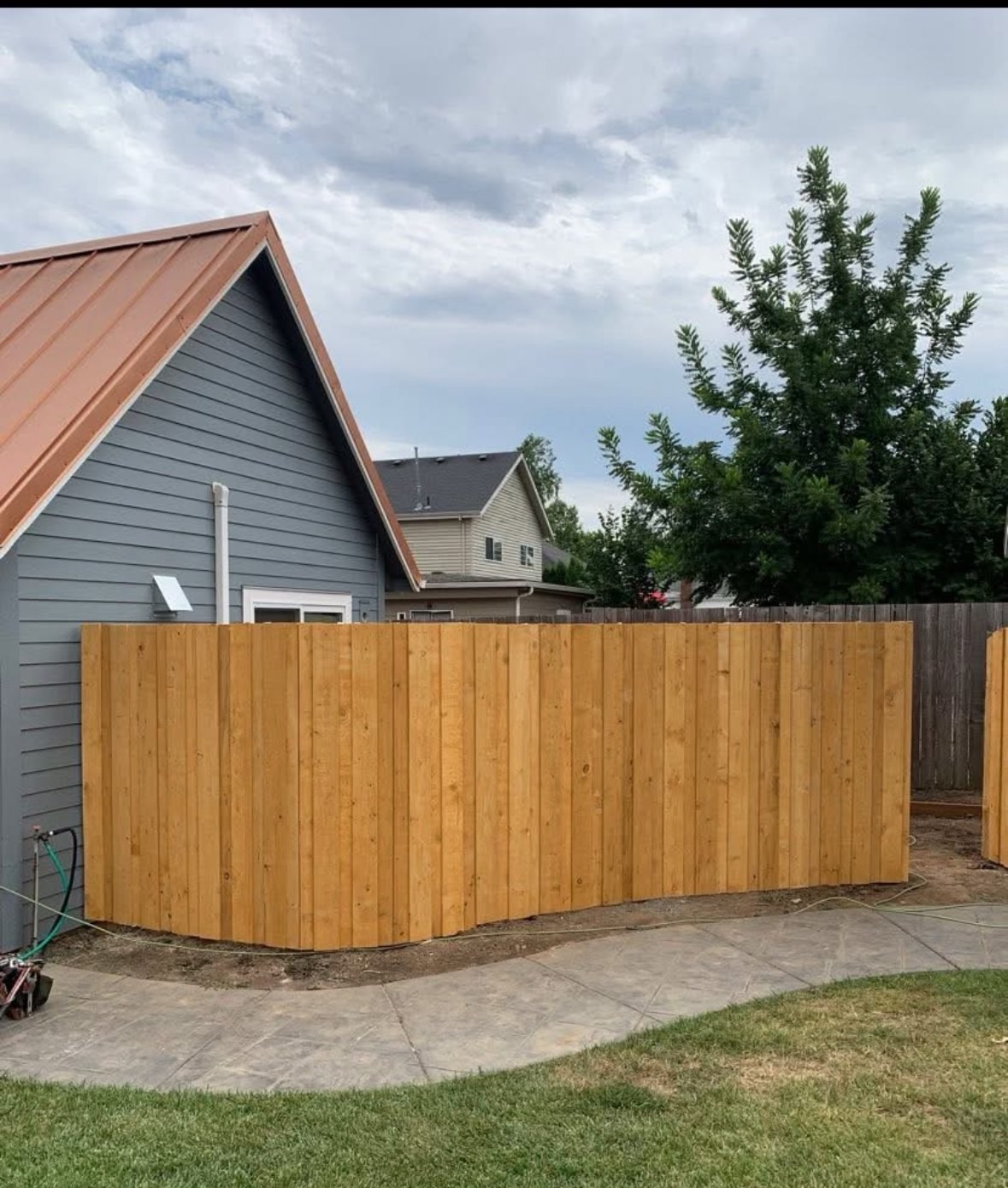
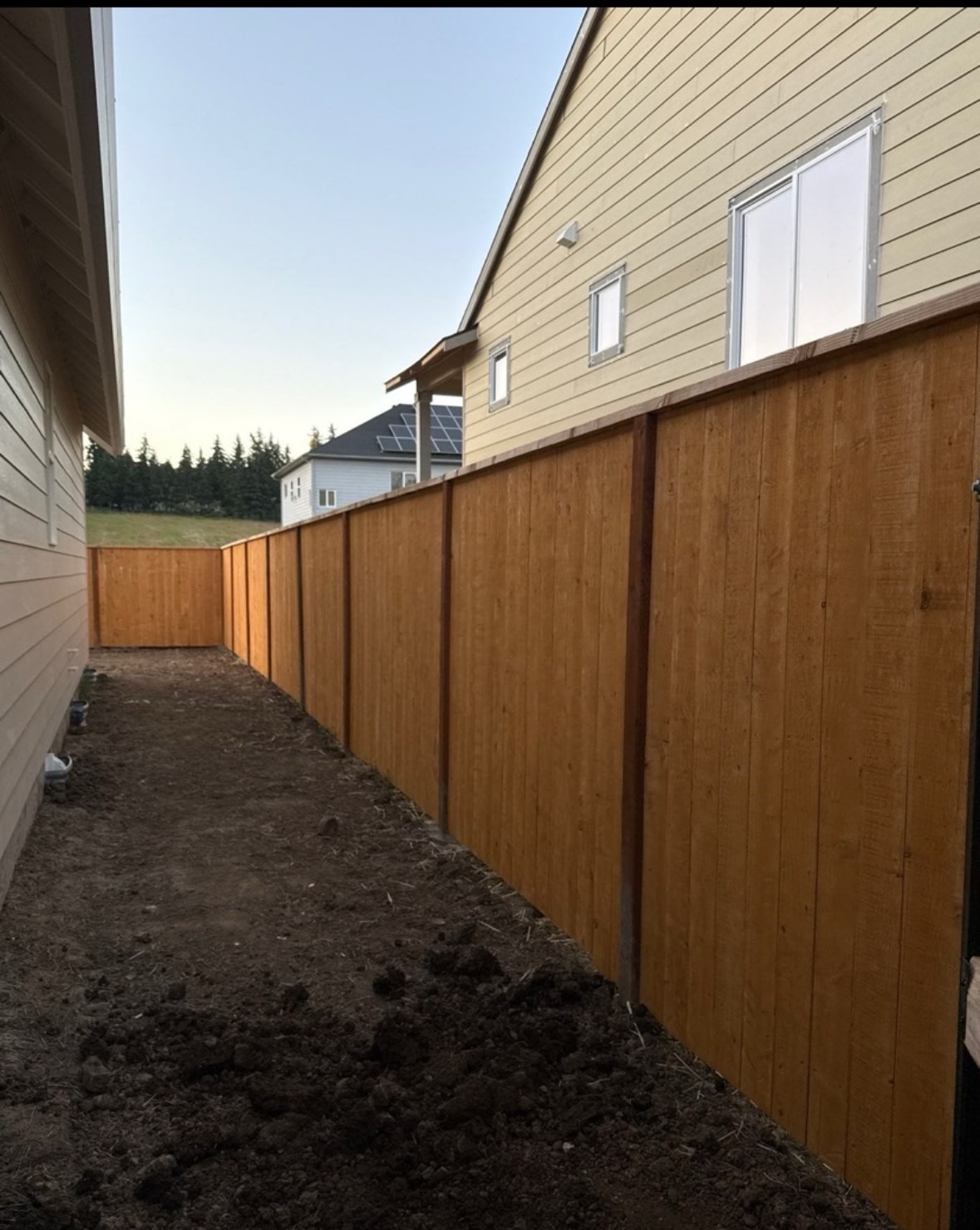
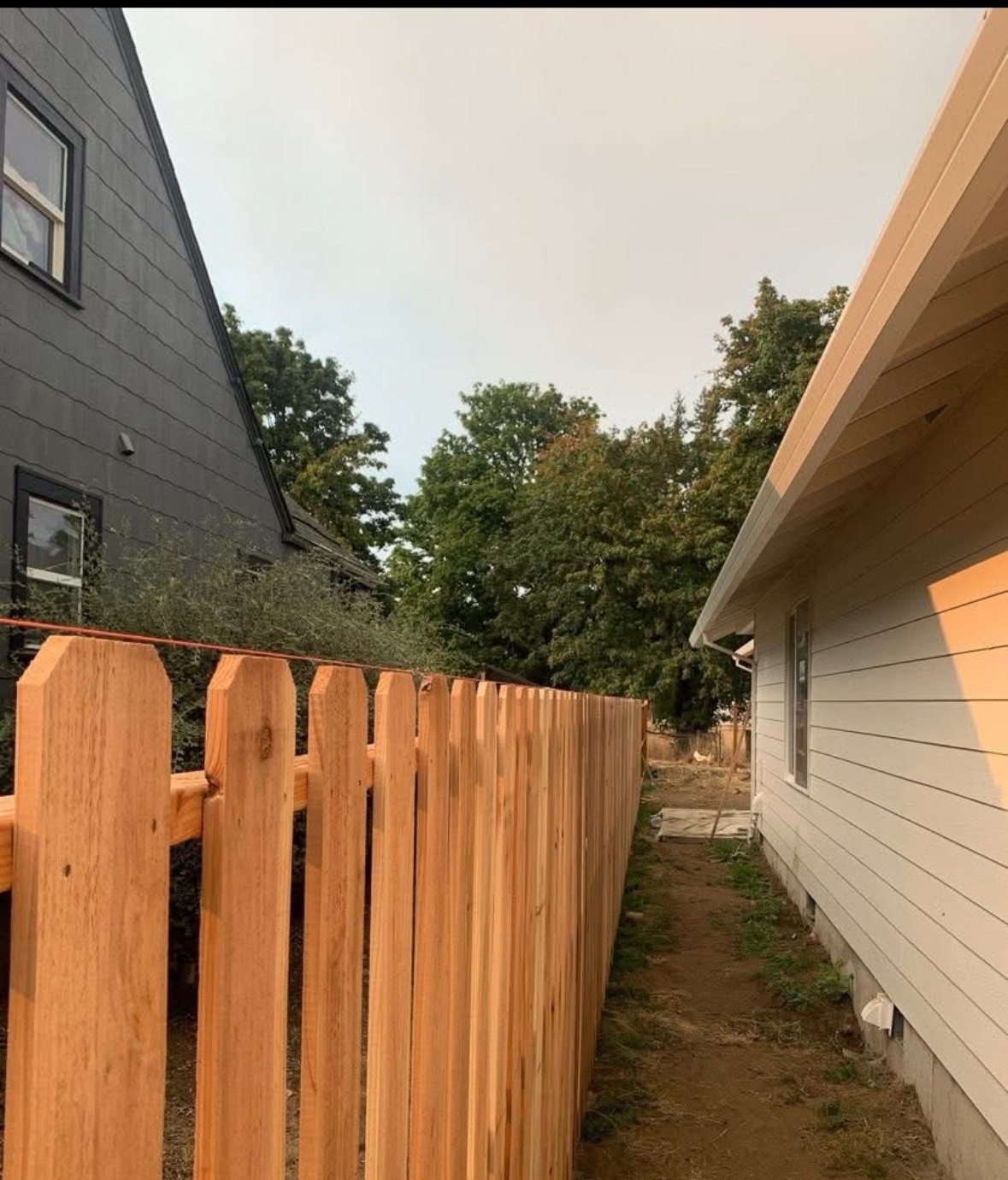
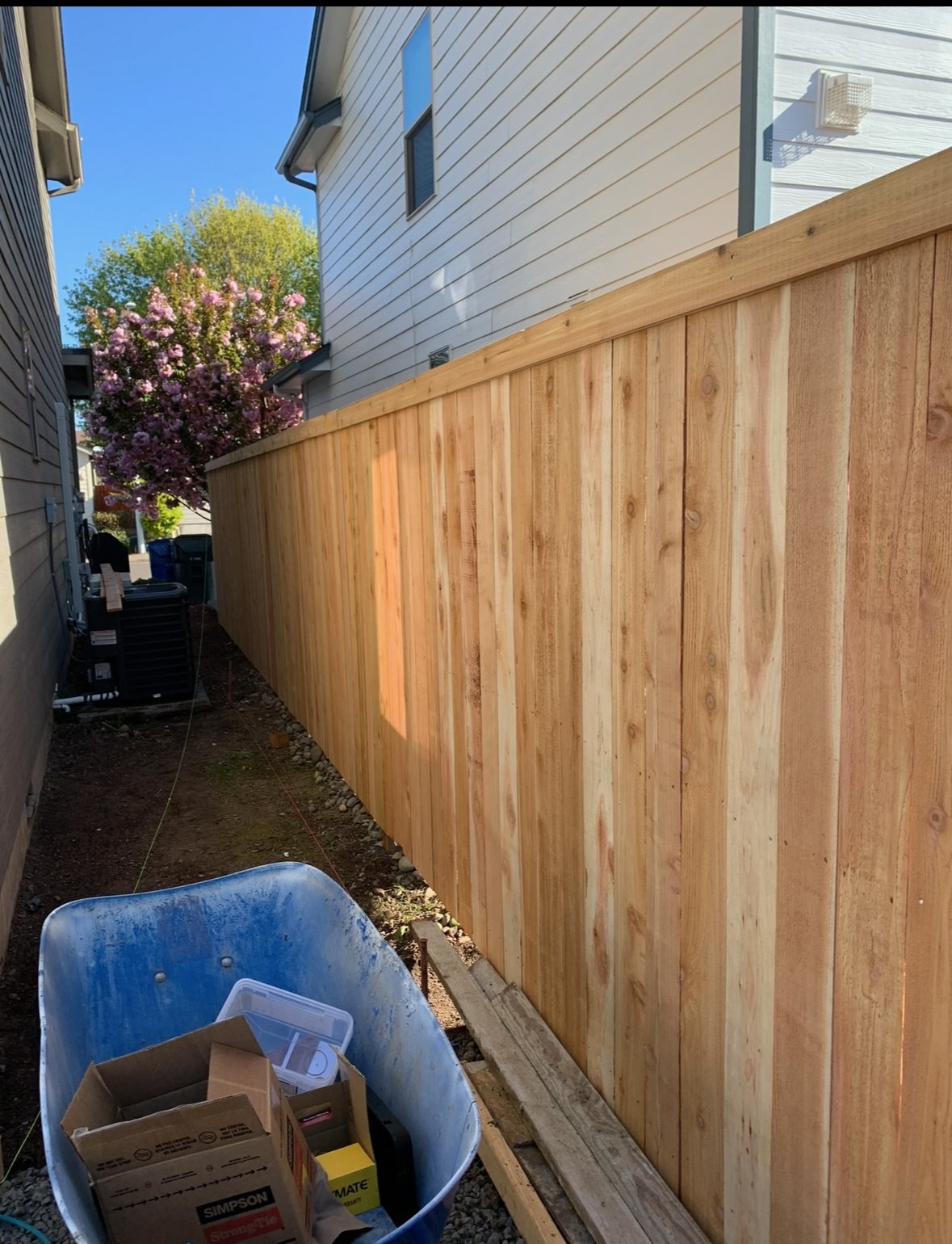
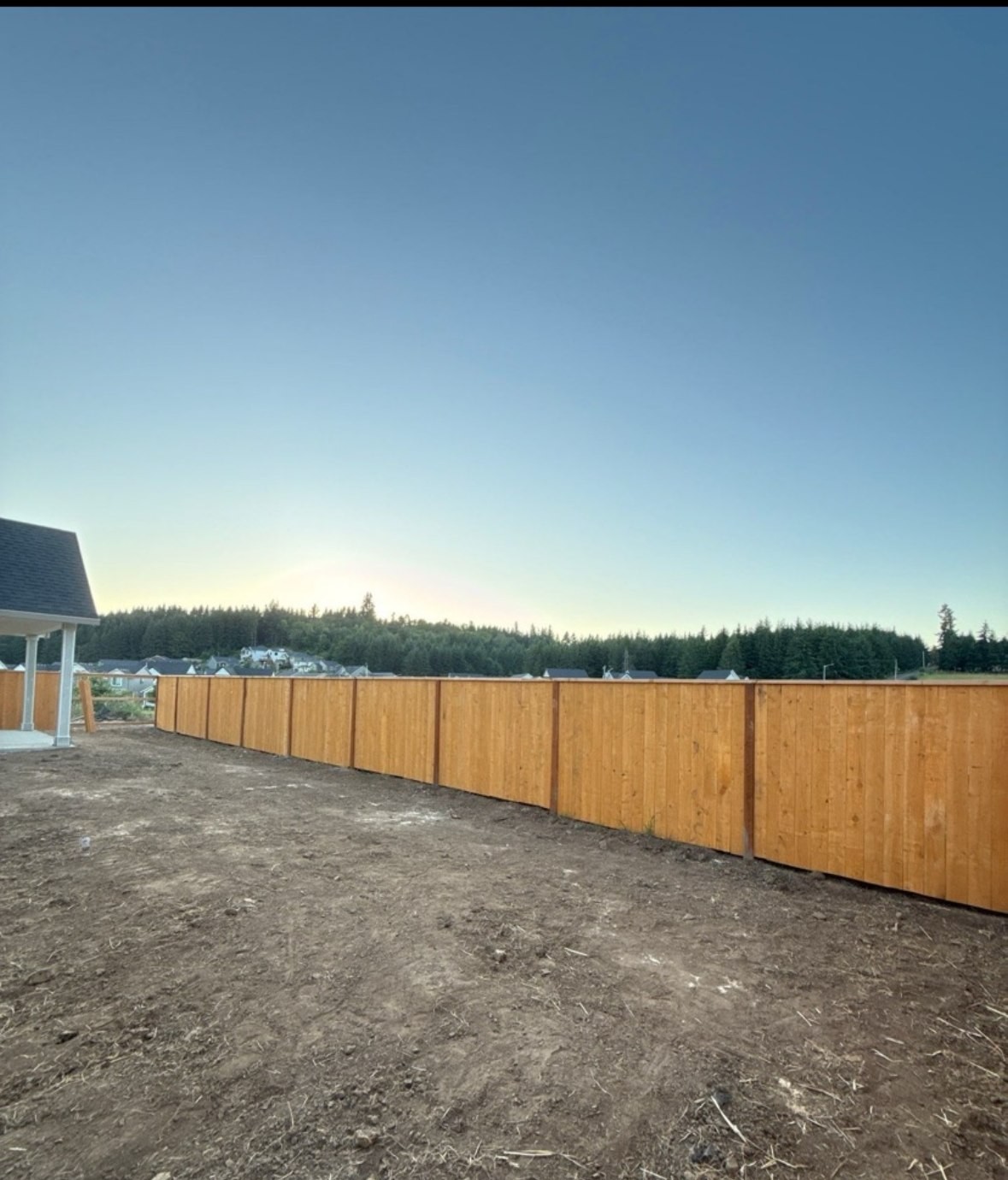
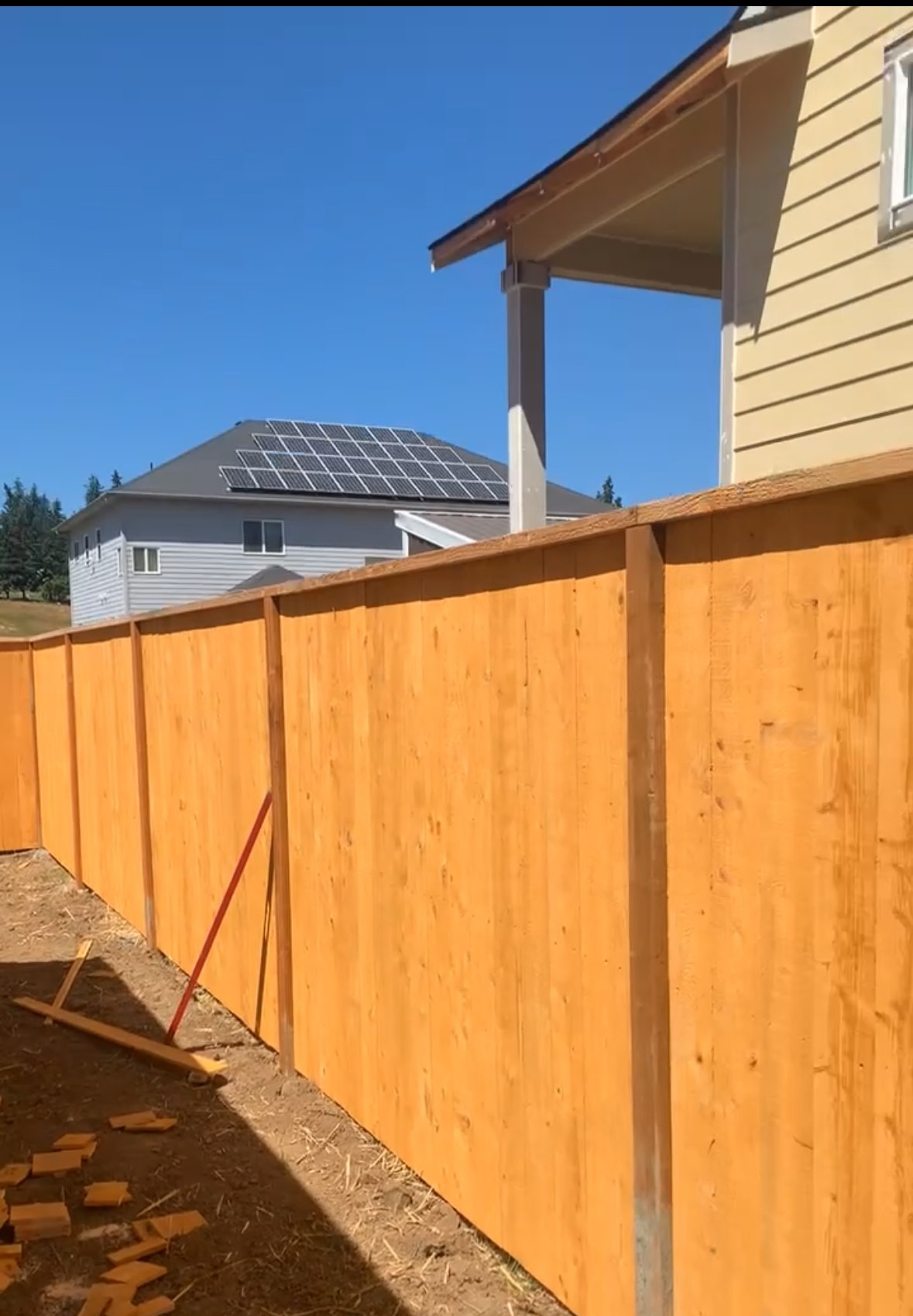
Fences we've actually built
Real jobs, photographed as they finished. No stock photography.
Questions Dallas homeowners ask
How tall can my back fence be in Dallas, Oregon?
Along an interior side or rear line, seven feet is the tallest you can build without a building permit. You can go higher, but Development Code 3.2.050.A then requires a building permit in addition to the land use review. Two exceptions to check first. If yours is a reverse-frontage (through) lot and the back line abuts a street, 2.2.040 applies the front yard standard to that frontage, which drops you to four feet. And brick or masonry walls are subject to current building codes at any height under 3.2.050.D.3.
Do I need a permit to build a fence in Dallas?
Two separate approvals, and most people only hear about one. Unless your fence was already approved as part of a land division, conditional use permit or site design review, Development Code 3.2.050.A requires Land Use Review (Type I) approval from the Planning Division at any height — including a 6 ft back fence. A building permit is added on top when the fence is over seven feet. For wood, vinyl, composite or metal at or under seven feet, no building permit is needed; brick and masonry are different, because 3.2.050.D.3 subjects them to current building codes regardless of height. The city doesn't publish a fence form, so start with Planning at 503-831-3571.
Why can't I build a 6-foot fence across my front yard?
Because 3.2.050.B.1 caps fences and walls inside the front yard setback at four feet, measured from the grade closest to the street right-of-way. Table 2.2.030 makes that setback 15 ft deep in RL and 12 ft in RM and RH off a local street with standard right-of-way, or 20 ft fronting a collector or arterial — and on a street without standard right-of-way it's measured from the designated centerline instead. Behind that line you're back to the seven-foot permit-free standard. The one exception out front is a single arbor or gate up to 8 ft tall and 6 ft wide, kept clear of the required vision areas.
I'm on a corner lot in Dallas — what changes?
Vision clearance first. 3.1.020.N prohibits a solid fence between three and eight feet in height inside a vision clearance area where streets, driveways, alleys or mid-block lanes meet without a stop sign or signal, and Figure 3.1.020N dimensions that area at 15 ft. The City Engineer can require a larger one. Then the height question: 6.2.070.B says that on a corner lot with two street frontages, the location of the front entry determines the front of the lot — so your other frontage is a street side yard, and 3.2.050.B.1 caps height only within a front yard setback. The code doesn't say whether that 4 ft cap reaches a street side yard, so ask Planning before you commit to a height on that side.
Are you licensed and insured?
Yes — Oregon CCB #257281, and insured. You can look the licence up yourself on the Oregon Construction Contractors Board site. Oregon requires contractors to put that number on their advertising, so if you're comparing quotes and someone doesn't show theirs, that's worth asking about.
Do you charge for an estimate?
No. Request a free quote and we'll follow up to learn more about the project — what you want built, repaired or replaced, and where the line runs.
Are you actually local?
Yes. Live Your Future Construction LLC is an Oregon company based in Albany, working Dallas and the mid-Willamette Valley. When you call, you get the person who'll be building your fence — not a scheduler in another state.
Other areas we cover
Fence rules change at every city line. These are written up the same way, city by city.
- Fence company in Salem, Oregon
- Fence company in Albany, Oregon
- Fence company in Keizer, Oregon
- Fence company in Corvallis, Oregon
- Fence company in Lebanon, Oregon
- Fence company in Sweet Home, Oregon
- Fence company in Philomath, Oregon
- Fence company in Independence and Monmouth, Oregon
- Fence company in Stayton, Oregon
- Fence company in Jefferson, Oregon
- Fence company in Millersburg and Tangent, Oregon
- Fence company in Silverton, Oregon